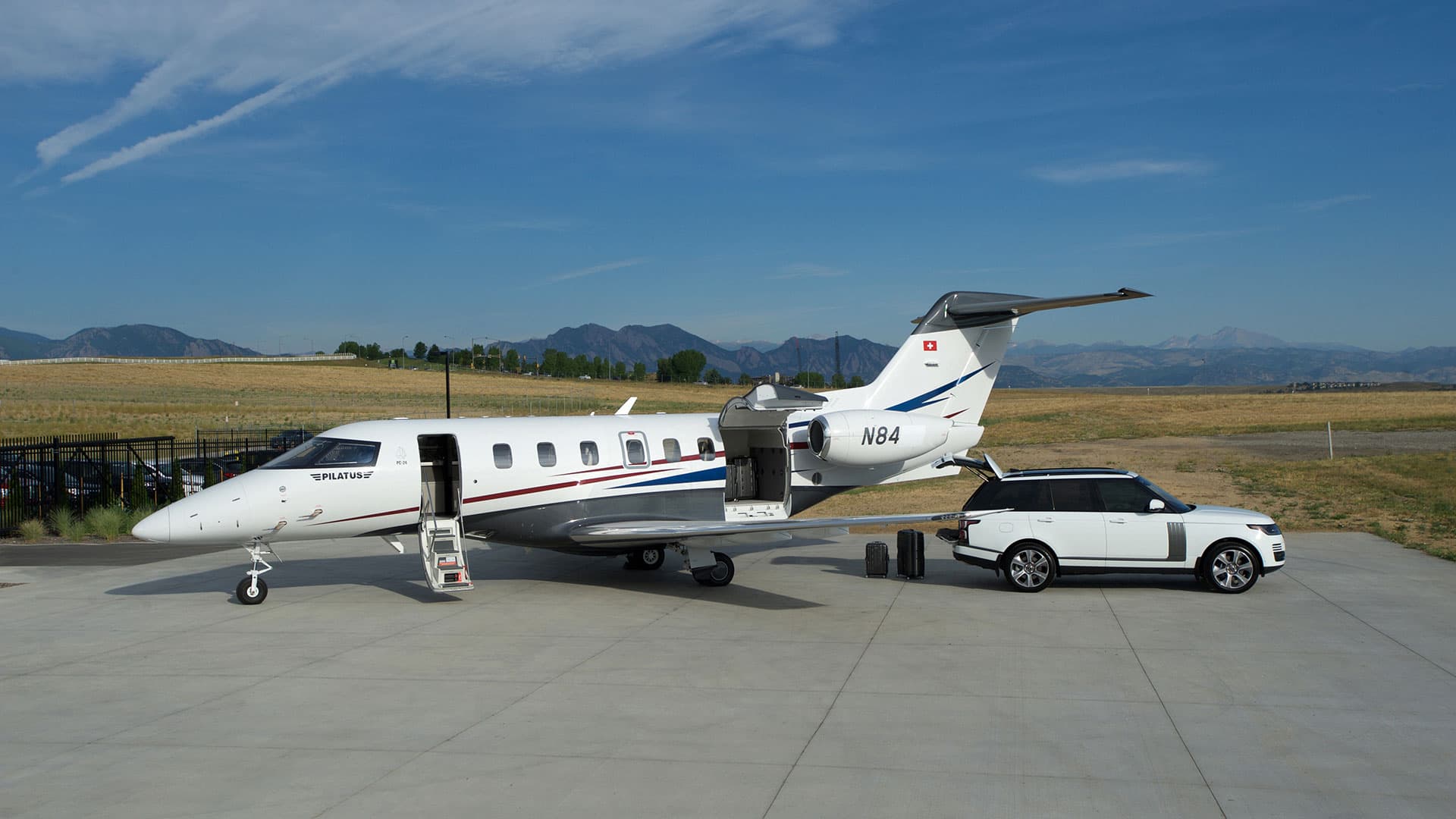
PC-24
Mid Jet
Einzigartig im Design.
Herausragend in
Leistung.
The Pilatus PC-24 is a twin-engine business jet produced by Pilatus Aircraft of Switzerland. Designed to combine light-jet speed, climb and altitude capability with twin-turboprop capacity, short-field / rough-field capability, and general utility, the airplane was viewed as a twin-engined, jet upgrade of their single-engine, turboprop PC-12, and a competitor to the Cessna Citation CJ4 and Embraer Phenom 300.
The aircraft was first revealed to the public on 21 May 2013, with the maiden flight on 11 May 2015. The PC-24 received EASA and FAA type certification on 7 December 2017 and the first customer delivery was on 7 February 2018.
During the 1990s, Pilatus Aircraft had brought to market the Pilatus PC-12, a single-engine turboprop-powered business aircraft. As the PC-12 quickly proved to be a commercial success, Pilatus sought to follow up with a complementary aircraft and began gathering feedback from customers of the type. In response to this request, several customers reportedly expressed a desire for an aircraft that would possess both a greater range and top speed than the existing PC-12, while retaining the type's overall ruggedness and ability to make use of very short runways. Based on this feedback, Pilatus elected to pursue development of such an aircraft. In 2007, Pilatus initiated work on the program. Development of the aircraft was conducted using existing company funds. The design program was first mentioned by Pilatus in its May 2011 annual report.
Designated as the PC-24, Pilatus decided to power the type using a pair of Williams FJ44 engines; the PC-24 is the company's first jet-powered aircraft. Several competing business aircraft were identified early on, including Embraer's Phenom 300 and Cessna's Citation CJ4.
Beyond the propulsion choice, several other unique features were developed for the PC-24; Pilatus and Honeywell cooperatively designed the Advanced Cockpit Environment for the type. This is intended to reduce pilot workload and allows the PC-24 to be single-pilot certified. The avionics system is based on Honeywell Primus Epic 2.
On 21 May 2013, the PC-24 was introduced to the public at the European Business Aviation Convention & Exhibition (EBACE) in Geneva. At the time, Pilatus chairman Oscar Schwenk claimed the PC-24 did not fit into any existing business jet categories, and stated that the aircraft was the only one that combined "...the versatility of a turboprop with the cabin size of a medium light jet, and the performance of a light jet"
PC-24 prototype during its roll-out ceremony
On 1 August 2014, which is also Switzerland's national day, P01, the first of the three PC-24 prototypes, was rolled out.[11] Each of these three prototypes serve different functions in the development program; P01 is intended for exploring the flight envelope of the type, P02 is mainly for trialling the avionics and autopilot integration, and will spend much of its testing life in the US, while P03 is to be representative of production aircraft and will incorporate improvements made based upon the development work performed with the other two aircraft.
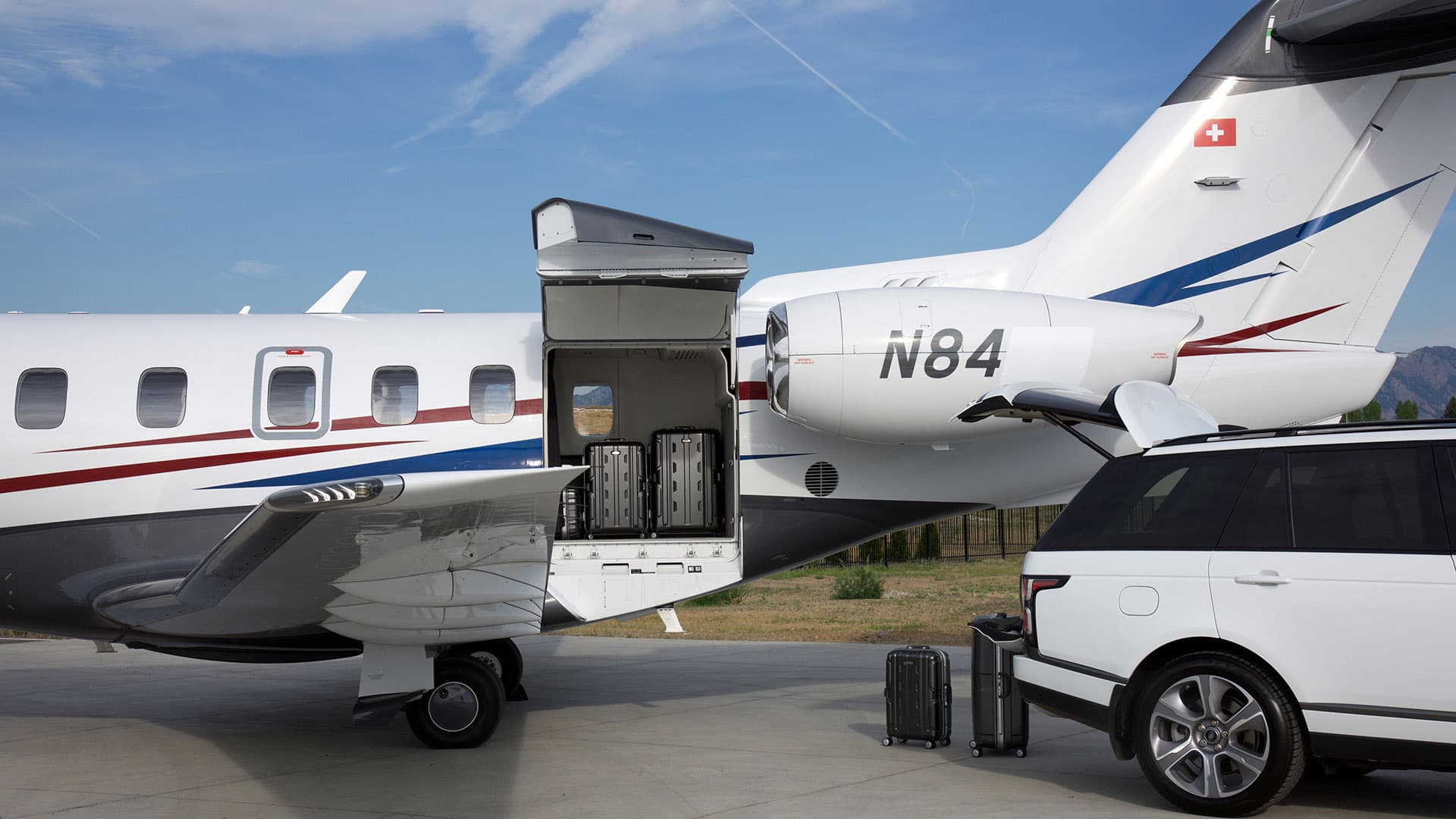
The Pilatus PC-24 Medium Jet is manufactured by Pilatus between 2017 and . The cabin measures 23.0 feet long by 5.6 feet wide by 5.1 feet tall giving it a total cabin volume of 503.0 cubic feet making it comfortable for up to 8 passengers. The baggage compartment can hold up to 12.9 bags assuming your average piece of luggage is less than 5 cubic feet. The Pilatus PC-24 has a maximum range (not including headwinds, high altitude, hot temperatures, or higher capacity) of 2,342 miles and a maximum speed of 506 mph. Common names and abbreviations: Pilatus PC-24, PC-24.
Jetzt anfragenThe aircraft was first revealed to the public on 21 May 2013, with the maiden flight on 11 May 2015. The PC-24 received EASA and FAA type certification on 7 December 2017 and the first customer delivery was on 7 February 2018.
Deelopment:
During the 1990s, Pilatus Aircraft had brought to market the Pilatus PC-12, a single-engine turboprop-powered business aircraft. As the PC-12 quickly proved to be a commercial success, Pilatus sought to follow up with a complementary aircraft and began gathering feedback from customers of the type. In response to this request, several customers reportedly expressed a desire for an aircraft that would possess both a greater range and top speed than the existing PC-12, while retaining the type's overall ruggedness and ability to make use of very short runways. Based on this feedback, Pilatus elected to pursue development of such an aircraft. In 2007, Pilatus initiated work on the program. Development of the aircraft was conducted using existing company funds. The design program was first mentioned by Pilatus in its May 2011 annual report.
Designated as the PC-24, Pilatus decided to power the type using a pair of Williams FJ44 engines; the PC-24 is the company's first jet-powered aircraft. Several competing business aircraft were identified early on, including Embraer's Phenom 300 and Cessna's Citation CJ4.
Beyond the propulsion choice, several other unique features were developed for the PC-24; Pilatus and Honeywell cooperatively designed the Advanced Cockpit Environment for the type. This is intended to reduce pilot workload and allows the PC-24 to be single-pilot certified. The avionics system is based on Honeywell Primus Epic 2.
On 21 May 2013, the PC-24 was introduced to the public at the European Business Aviation Convention & Exhibition (EBACE) in Geneva. At the time, Pilatus chairman Oscar Schwenk claimed the PC-24 did not fit into any existing business jet categories, and stated that the aircraft was the only one that combined "...the versatility of a turboprop with the cabin size of a medium light jet, and the performance of a light jet"
PC-24 prototype during its roll-out ceremony
On 1 August 2014, which is also Switzerland's national day, P01, the first of the three PC-24 prototypes, was rolled out.[11] Each of these three prototypes serve different functions in the development program; P01 is intended for exploring the flight envelope of the type, P02 is mainly for trialling the avionics and autopilot integration, and will spend much of its testing life in the US, while P03 is to be representative of production aircraft and will incorporate improvements made based upon the development work performed with the other two aircraft.
The Pilatus PC-24 Medium Jet is manufactured by Pilatus between 2017 and . The cabin measures 23.0 feet long by 5.6 feet wide by 5.1 feet tall giving it a total cabin volume of 503.0 cubic feet making it comfortable for up to 8 passengers. The baggage compartment can hold up to 12.9 bags assuming your average piece of luggage is less than 5 cubic feet. The Pilatus PC-24 has a maximum range (not including headwinds, high altitude, hot temperatures, or higher capacity) of 2,342 miles and a maximum speed of 506 mph. Common names and abbreviations: Pilatus PC-24, PC-24.
Spezifikationen
PassagierkapazitätBis zu 8 Passagiere
Flugdauer2 Std. 30 Min.
Maximale Reichweite2,035 nm
Gepäckkapazität580 cu ft
Geschwindigkeit440 Knoten
Reiseflughöhe42,000 ft
Minimale Landebahnlänge2,920 ft
Flugzeuglänge55' 2
Kabinenabmessungen & Konfigurationen
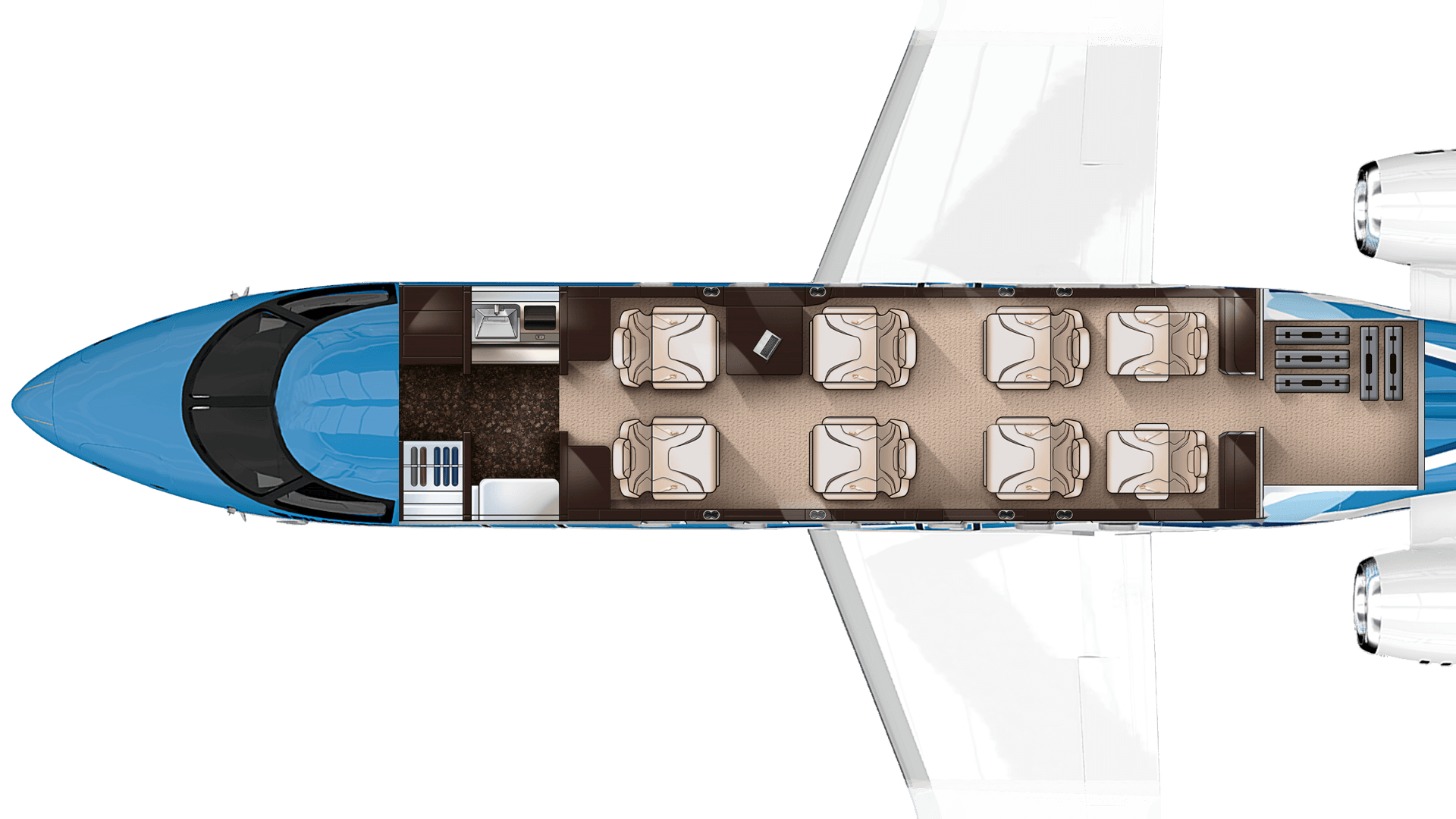
23'
Länge
5' 7
Breite
5' 1
Höhe
Kabinenausstattung
- Full Bordküche
- Full Waschraum
- Golftaschen (6)
- Skitaschen (6)
Die PC-24 entdecken
1 / 16
Verpflichtet dem Flug
Der zu Ihnen passt
Unser beratender Ansatz führt Sie zu dem Privatjet-Charter, der Ihren Anforderungen am besten entspricht. Diese adaptive Philosophie ist ein Grundpfeiler dafür, wie wir unvergessliche Reisen ganz nach Ihren Wünschen und Vorlieben gestalten.
Verbinden Sie sich mit echter Luftfahrt-Expertise
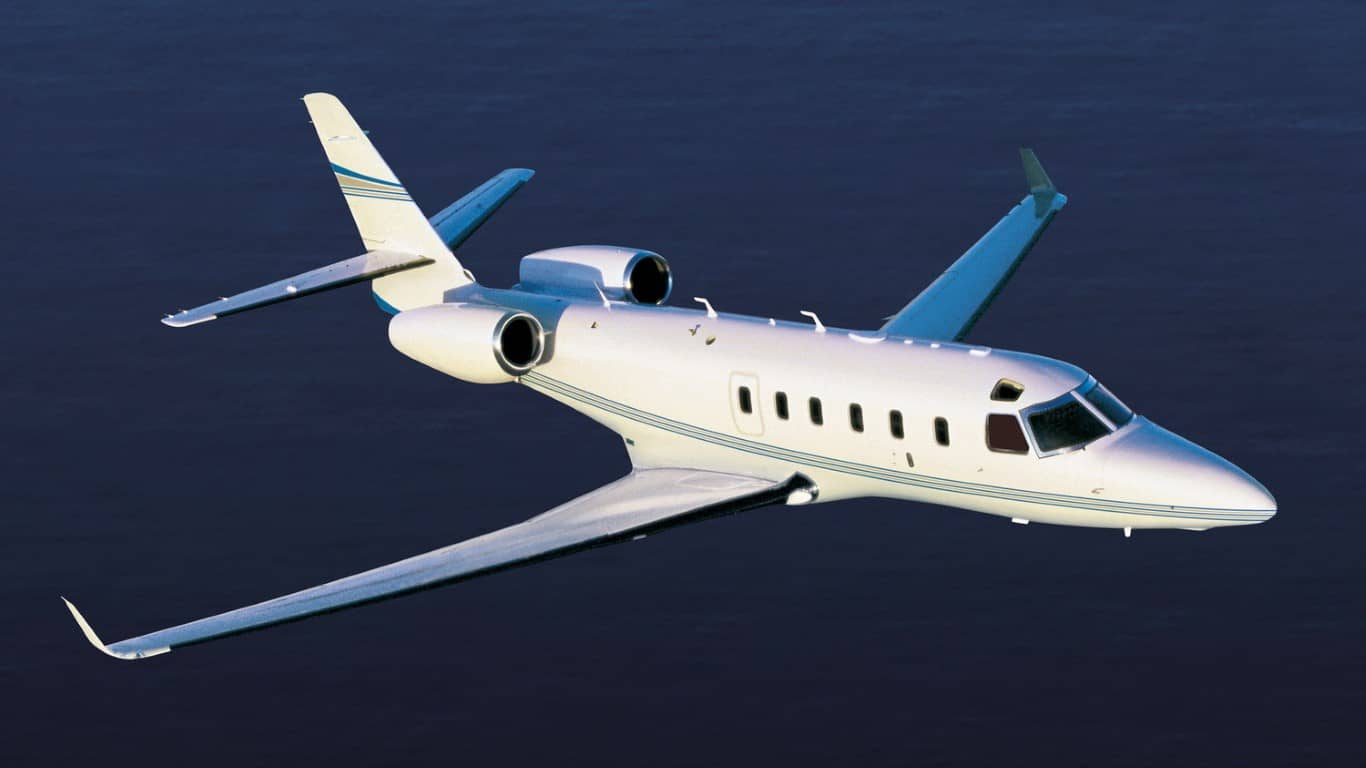
PC-24
$4225 - $45500/Std.