Cessna Citation XLS: Specs, Interior & Charter Cost (2026 Guide)
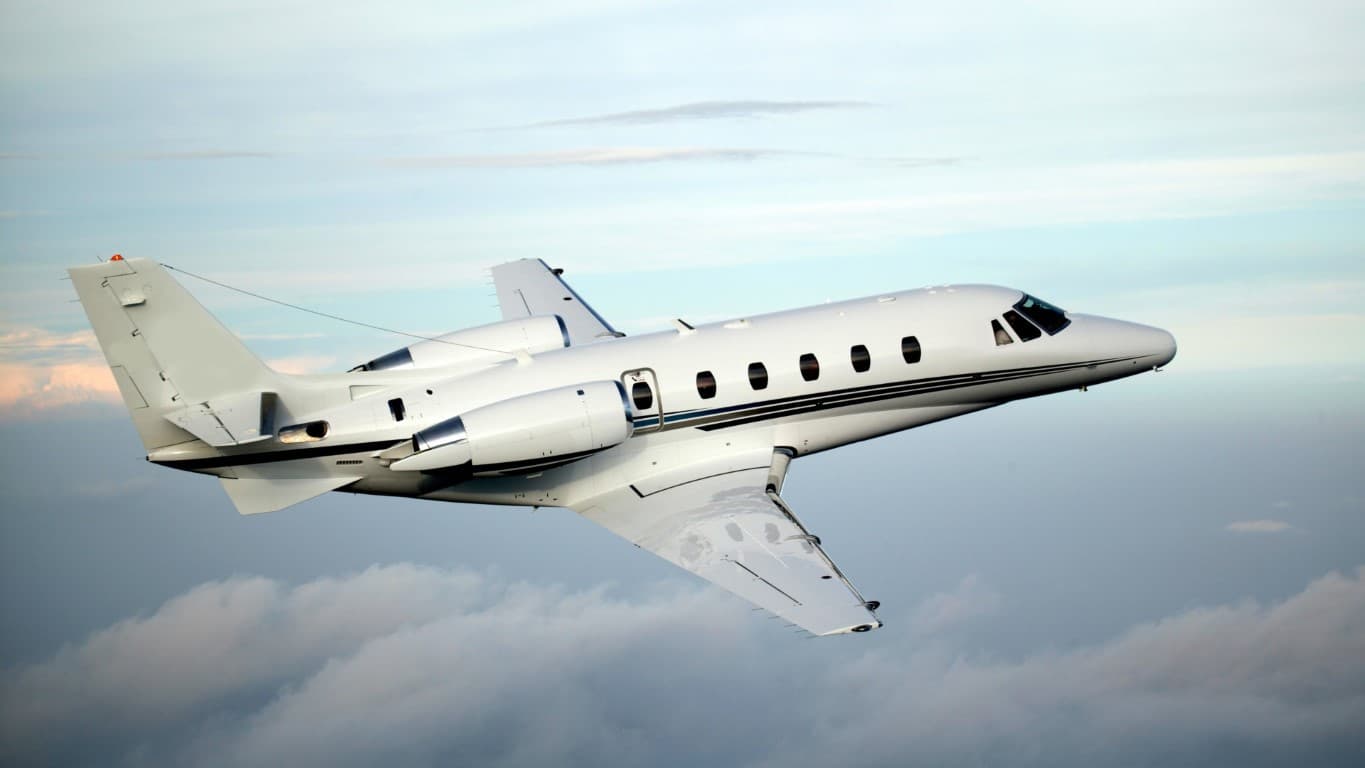
The Cessna Citation XLS is the best-selling midsize business jet in history — more than 1,000 units built across the XLS, XLS+, and the current XLS Gen2 production line, with the type remaining the most-chartered midsize jet in the world. It is a 1,950 nautical mile, Mach 0.75 workhorse built around a stand-up cabin, short-field performance that opens up airports a Hawker or Learjet cannot use, and single-pilot certification that keeps operating costs below any competitor in the class. This guide covers every Citation XLS spec that matters, real 2026 charter hourly rates from the DesJets operator network, a full cabin tour, and how it compares to the XLS+, Hawker 850XP, and Learjet 60.
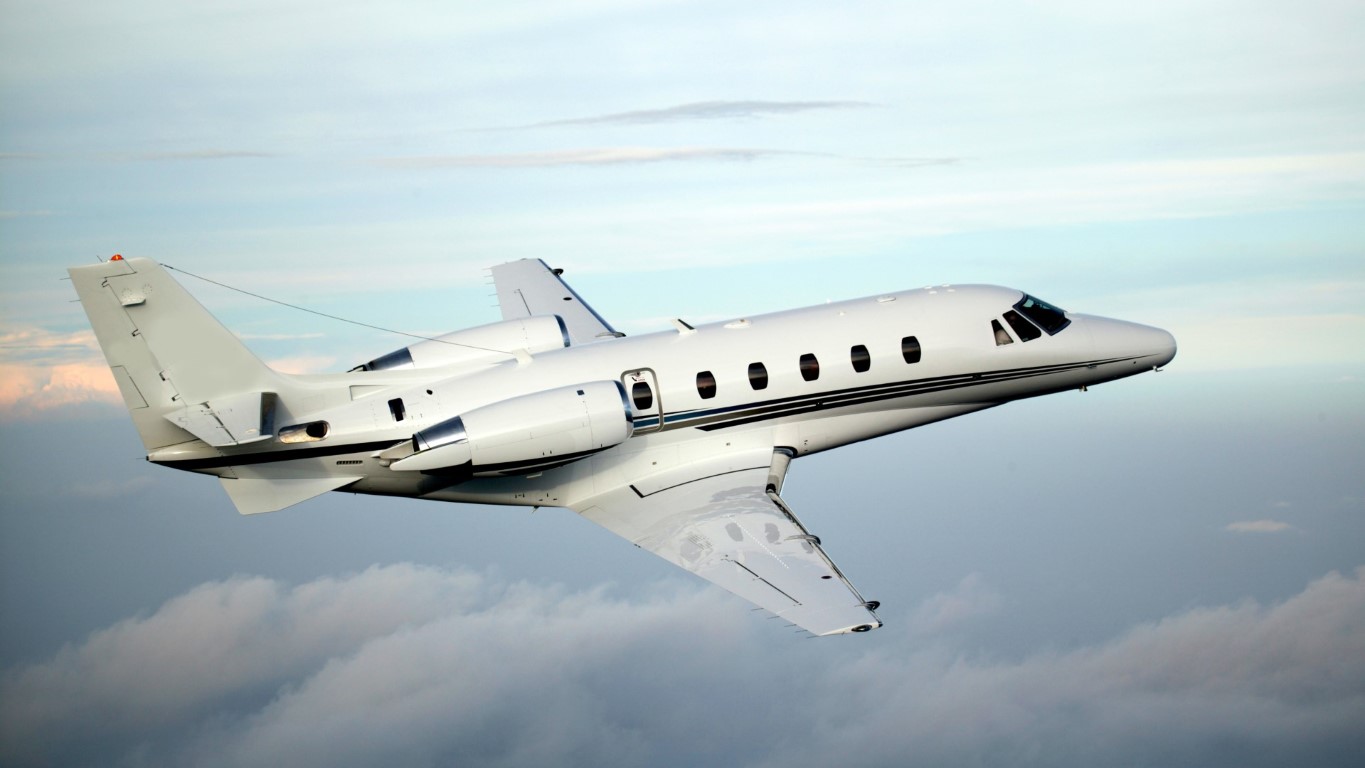
Cessna Citation XLS at a Glance
The Citation XLS is a twin-engine midsize business jet built by Cessna / Textron Aviation at the Wichita, Kansas facility. The type is the direct successor to the Citation Excel (2000–2004), with Rockwell Collins Pro Line 21 avionics, winglets, and uprated Pratt & Whitney Canada PW545B engines. First delivery of the XLS was 2004. In 2008, Cessna replaced the XLS with the Citation XLS+, which added FADEC-controlled PW545C engines, a redesigned nose, and more capable avionics. The current production variant is the Citation XLS Gen2, announced in 2022 and in service from 2023, with Garmin G5000 flight deck and a refreshed cabin.
Note on naming: there is no aircraft called the "Citation XL." That shorthand is often used informally to refer to the Citation Excel (the direct predecessor), the XLS, or the XLS+. Technically, Cessna's model progression is Excel → XLS → XLS+ → XLS Gen2. In charter listings, "XL" almost always means XLS unless the operator explicitly specifies Excel.
| Specification | Cessna Citation XLS |
|---|---|
| Manufacturer | Cessna / Textron Aviation |
| Category | Midsize jet |
| Production | 2004 – 2008 (XLS); 2008–2024 (XLS+); 2023–present (XLS Gen2) |
| Total units built (XLS family) | 1,000+ (best-selling midsize jet in history) |
| Max range | 1,950 nm (3,610 km) with 4 pax, NBAA IFR reserves |
| Max cruise speed | Mach 0.75 (~441 KTAS) |
| Long-range cruise | Mach 0.70 |
| Max operating altitude | 45,000 ft |
| Engines | 2 × Pratt & Whitney Canada PW545B (3,804 lbf each) |
| Passenger seats | Up to 9 (typical: 8) |
| Crew | 2 pilots (single-pilot certified) |
| Cabin length | 18 ft 6 in (5.64 m) |
| Cabin width | 5 ft 5 in (1.65 m) |
| Cabin height | 5 ft 7 in (1.70 m) — flat floor, stand-up |
| Baggage capacity | 90 cu ft |
| Takeoff distance | 3,560 ft (sea level, MTOW) |
| Landing distance | 3,180 ft |
| Charter rate (2026) | $4,368 – $13,304 per hour |
| New list price (XLS Gen2, 2026) | ~$15 million |
Range, speed, ceiling, and cabin dimensions above are Cessna's published Citation XLS specifications. Charter rate range is the actual quoted band across the DesJets Citation XLS operator network.
Citation XLS Range: True Transcontinental US Non-Stop
The Citation XLS's certified maximum range is 1,950 nautical miles (3,610 km) with 4 passengers and NBAA IFR reserves, at long-range cruise of Mach 0.70. That is enough to connect most US coast-to-coast missions with one fuel stop, and to fly non-stop between every major US city east of Denver, every West Coast to Rockies pair, and almost every intra-European route.
Representative Citation XLS missions flown routinely:
- New York (TEB) → Chicago (MDW) — 650 nm, non-stop with full passenger load
- Miami (OPF) → New York (TEB) — 950 nm, non-stop with 1 hour of reserve
- Los Angeles (VNY) → Dallas (ADS) — 1,100 nm, non-stop
- Chicago (MDW) → Aspen (ASE) — 840 nm, non-stop with margin for Aspen's high elevation
- Dallas (ADS) → Las Vegas (VGT) — 960 nm, non-stop
- London (LTN) → Rome (CIA) — 790 nm, non-stop
- Paris (LBG) → Marrakech (RAK) — 1,020 nm, non-stop
- Dubai (DWC) → Mumbai (BOM) — 1,100 nm, non-stop
The practical ceiling for a non-stop Citation XLS mission is about 1,700 nm with 6+ passengers and full catering. New York to Los Angeles (2,145 nm) requires a fuel stop in both directions year-round, which is the one limitation that pushes buyers up to a super-midsize jet like the Challenger 350 or Praetor 600 if transcon non-stop is a hard requirement.
Citation XLS Speed: Mach 0.75 Midsize Cruise
The Citation XLS's maximum operating speed is Mach 0.75 (approximately 441 knots true airspeed at altitude). Long-range cruise is Mach 0.70. That makes the XLS slower than most other midsize jets — the Hawker 850XP cruises at Mach 0.80, the Learjet 60 at Mach 0.81, and the super-midsize class at Mach 0.83+. The tradeoff is efficiency and runway performance; the XLS does not try to be fast, it tries to be flexible.
Typical block times:
- New York to Chicago in about 1h 45m
- Miami to New York in about 2h 30m
- Chicago to Aspen in about 2h 15m
- Los Angeles to Dallas in about 2h 45m
- London to Rome in about 2h 05m
The 45,000 ft service ceiling matches most heavy jets and keeps the XLS above most commercial traffic and weather. On routes under 1,000 nm the speed difference versus faster midsize jets amounts to only 10–15 minutes, which rarely matters for a charter mission that is dominated by boarding and taxi time.
Citation XLS Interior: 8-Seat Stand-Up Cabin
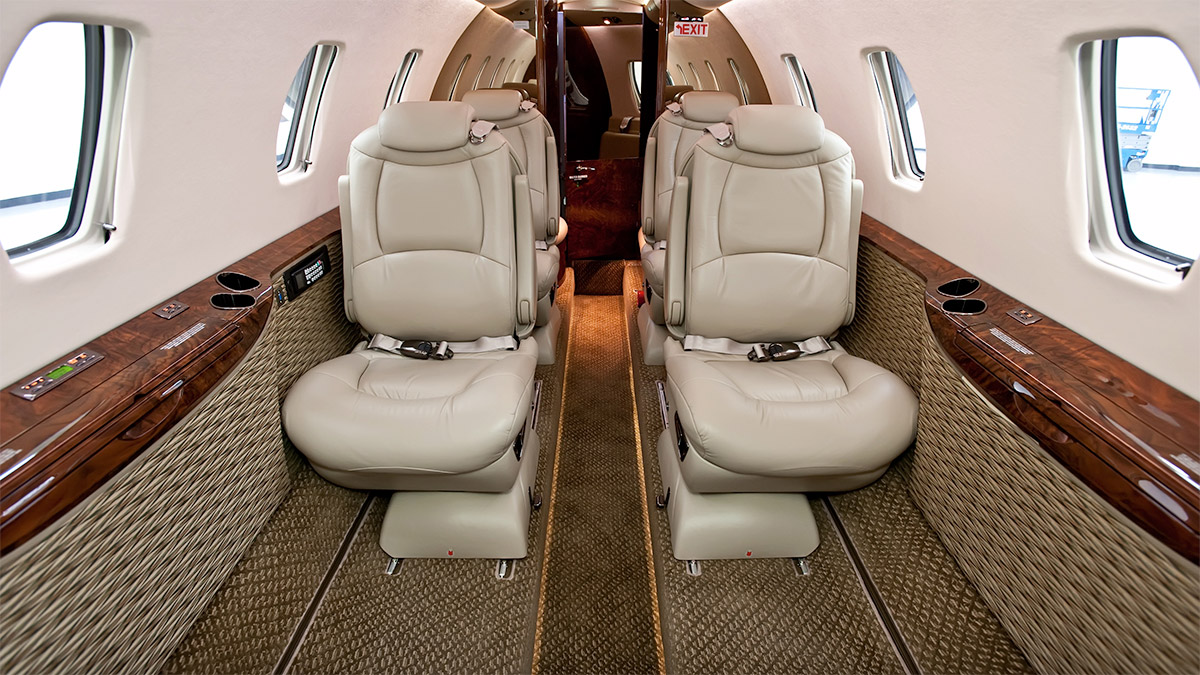
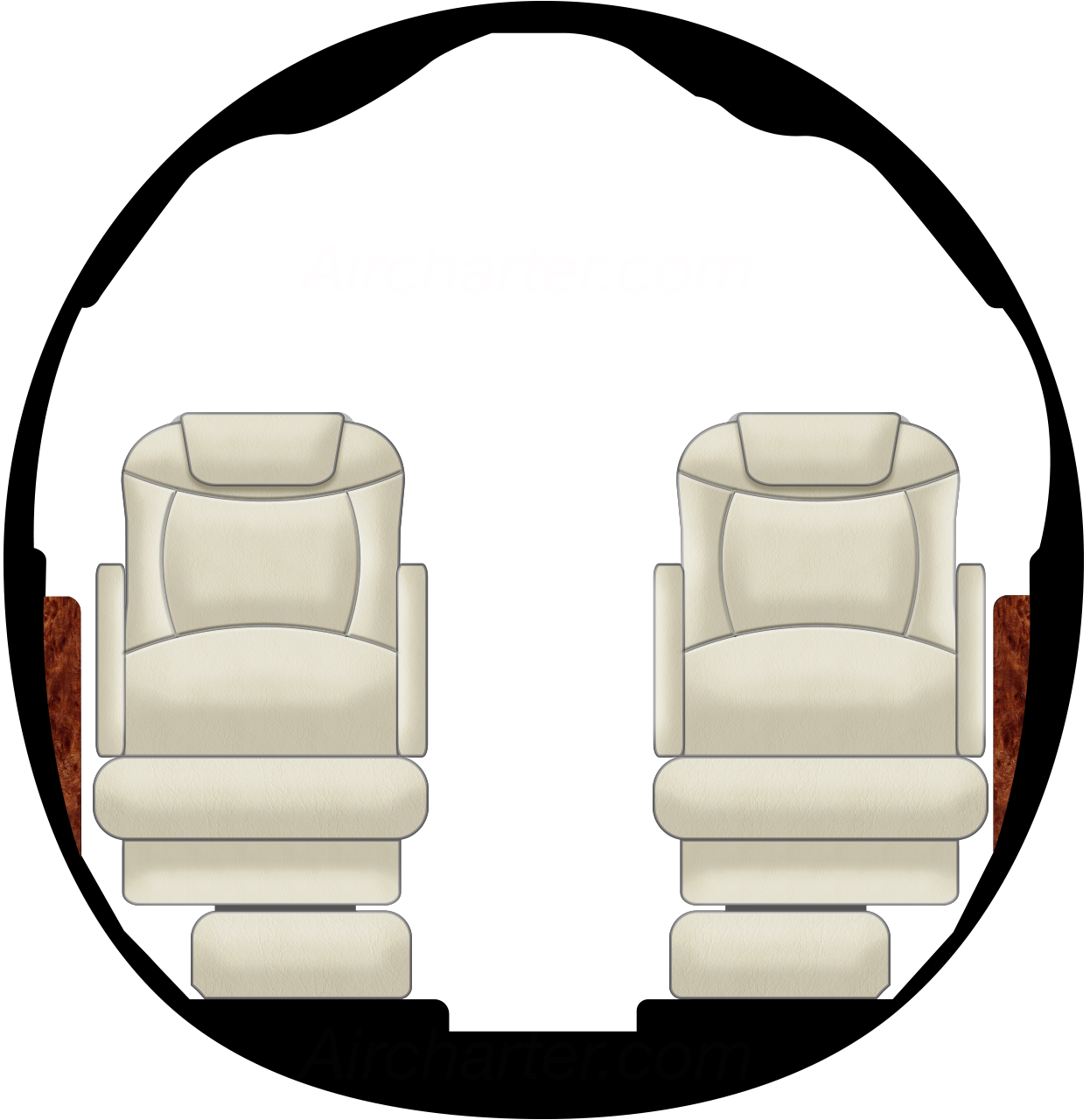
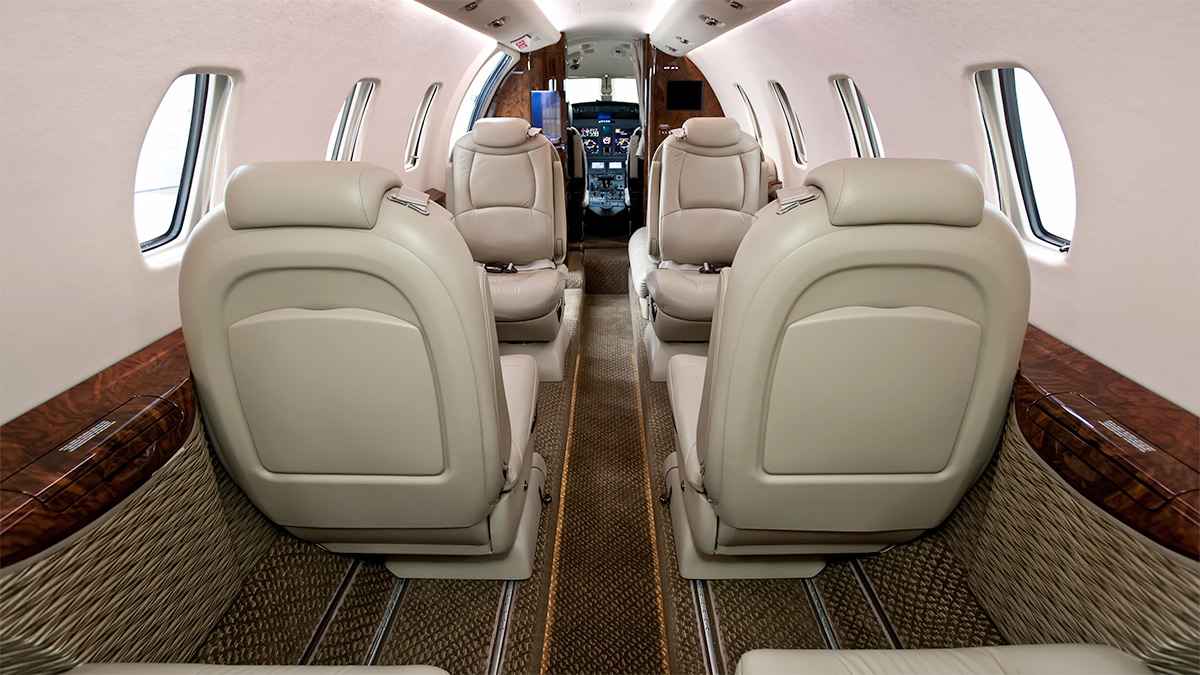
The Citation XLS cabin is 18 ft 6 in long, 5 ft 5 in wide, and 5 ft 7 in tall — a true stand-up cabin with a flat floor. The XLS is one of the smallest midsize jets by cabin width, nine inches narrower than the Challenger 350 at the shoulders, but matches it in cabin height. For 2–6 passengers on sub-1,000 nm missions, the cabin feels appropriately generous; on longer legs with 8 passengers the space is tighter than a super-midsize.
Standard 8-Seat Double-Club Layout
The most common Citation XLS configuration is a double-club: four club seats facing forward and aft with a worktable between each pair, delivering sleeping-capable seating for four when the seats are reclined. The remaining passengers sit in a two-place side-facing divan or a four-place aft galley bench depending on configuration. The "Citation XLS 8 seats" configuration — a frequently-searched layout — is the standard eight-seat club-plus-divan setup you'll find on nearly all operator fleets.
Seats and Finishes
XLS seats recline, swivel, and track outboard. Each seat has independent side-table controls, 110V AC and USB power outlets, and a dedicated reading light. The standard interior palette offered by Cessna at launch is a cream-and-leather combination; many charter 350s retain the factory interior while fractional NetJets and Flexjet aircraft often sport a slightly refreshed cabin with newer leathers and veneers.
Galley and Lavatory
The forward galley carries a microwave or convection oven (depending on operator spec), cold-storage drawers, hot and cold beverage containers, and a stowage area for catering carts. The aft lavatory is enclosed with a door, externally serviced, and includes a vanity mirror. The lavatory does NOT provide direct access to the baggage compartment — the 90 cu ft baggage area is accessed from the exterior only, so pack carry-ons separately for in-flight access.
Cabin Systems and Amenities
- Cabin altitude: 6,900 ft when the aircraft is at 45,000 ft — slightly higher than super-midsize class standards but acceptable for sub-3-hour legs
- Windows: 12 oval windows per side, smaller than modern designs but well-positioned
- Cabin management: factory system on 2008+ XLS and XLS+ aircraft; most are retrofitted with Gogo Avance L3 or L5 Wi-Fi
- Connectivity: Gogo ATG (air-to-ground) is standard on US-based aircraft; Ka-band Wi-Fi retrofit available on international 350s
- Noise: 60 dB at cruise — slightly louder than the Hawker 850XP but within normal midsize range
- Single-pilot certification: the XLS is certified for single-pilot operation (though charter rules require two) — this is a cost advantage that keeps operating costs below any other midsize jet
Citation XLS Charter Cost: 2026 Hourly Rates
Citation XLS charter rates in 2026 run $4,368 to $13,304 per flight hour across the DesJets operator network, with most quotes landing in the $5,500–$7,500 band. The spread reflects positioning cost, aircraft year of manufacture, cabin refurbishment status, and connectivity package — older 2004–2008 XLS aircraft with factory interiors sit toward the lower end, while 2015+ XLS+ aircraft with refurbished cabins and newer avionics sit at the top of the range. The current XLS Gen2 (2023+) commands a premium above the standard XLS+ band.
| Route | Distance | Flight time | Typical charter cost (2026) |
|---|---|---|---|
| New York (TEB) → Chicago (MDW) | 650 nm | ~1h 45m | $14,000 – $19,000 |
| Miami (OPF) → New York (TEB) | 950 nm | ~2h 30m | $17,000 – $23,000 |
| Los Angeles (VNY) → Dallas (ADS) | 1,100 nm | ~2h 45m | $18,500 – $25,000 |
| Chicago (MDW) → Aspen (ASE) | 840 nm | ~2h 15m | $16,000 – $21,000 |
| Dallas (ADS) → Las Vegas (VGT) | 960 nm | ~2h 30m | $17,000 – $22,500 |
| London (LTN) → Rome (CIA) | 790 nm | ~2h 05m | $15,000 – $20,000 |
| Paris (LBG) → Nice (NCE) | 370 nm | ~1h 15m | $10,000 – $14,000 |
| Dubai (DWC) → Doha (DOH) | 210 nm | ~55 min | $7,000 – $10,500 |
What's Included in a Citation XLS Charter Quote
A typical Citation XLS quote includes aircraft time, 2 pilots, standard fuel, and basic catering. The XLS does not require a cabin attendant under FAA rules at normal passenger loads. Variables added on top:
- Federal Excise Tax: 7.5% on US domestic segments; international segments are exempt
- Fuel surcharge: 5–15% of base rate, resets monthly; the XLS burns ~175 US gal/hr, which is low for a midsize
- International handling and permits: $1,000 – $4,000 depending on jurisdictions crossed
- Overflight and landing fees: typically $300 – $2,500 depending on airport
- Catering upgrades: $200 – $1,500 per leg for VIP menus
- Positioning: charged if the aircraft has to fly empty to reach you — because the XLS has the deepest installed base in midsize charter (300+ in US Part 135 service), positioning cost is often zero
Empty leg opportunities on the Citation XLS are among the most common in business aviation — the type's deep installed base means dozens of repositioning flights happen daily across the US. DesJets publishes current XLS empty legs in the empty leg listings, often at 40–60% off standard charter pricing.
Citation XLS Purchase Price: New and Used
Cessna's current list price on a new Citation XLS Gen2 is approximately $15 million for 2026 deliveries. The XLS+ was priced at approximately $13 million at the end of its production run in 2024.
Used Citation XLS market pricing (2026 typical):
- 2004 original XLS: $2.8M – $3.8M
- 2006–2008 original XLS (late production): $4.0M – $5.5M
- 2008–2012 early XLS+: $5.0M – $7.0M
- 2013–2018 XLS+: $7.0M – $10.5M
- 2019–2023 XLS+ (final production): $10.5M – $14M
- 2024+ XLS Gen2 (near-new): $13M – $15M
Residual values on the Citation XLS family have held unusually well — a function of massive installed base (1,000+ aircraft), strong parts and MRO support at every major US and European FBO, Textron's continued production of the type, and the aircraft's single-pilot certification which keeps operating costs low. Preowned XLS availability typically runs 4–6% of the installed fleet, which is normal for a mature production type.
Total Cost of Ownership
Direct operating cost on the Citation XLS runs approximately $1,800–$2,400 per flight hour (fuel at current prices, engine reserves, airframe maintenance reserves), before fixed costs. Adding pilots, insurance, hangar, and non-flying overhead, budget approximately $1.1–1.6 million per year at 400 annual flight hours — a typical owner-operated utilization. This is the lowest total ownership cost of any midsize jet in production and significantly below the Hawker 850XP or Learjet 60. Charter rates of $4,368–$13,304/hr reflect operators' margin on top of this low baseline.
Citation XLS vs the Competition
| Aircraft | Max Range | Max Speed | Cabin (L × W × H) | Charter $/hr |
|---|---|---|---|---|
| Cessna Citation XLS | 1,950 nm | Mach 0.75 | 18'6" × 5'5" × 5'7" | $4,368 – $13,304 |
| Cessna Citation XLS+ | 2,100 nm | Mach 0.75 | 18'6" × 5'5" × 5'7" | $5,000 – $13,500 |
| Cessna Citation XLS Gen2 | 2,100 nm | Mach 0.75 | 18'6" × 5'5" × 5'7" | $6,500 – $14,000 |
| Hawker 850XP | 2,642 nm | Mach 0.80 | 21'3" × 6'0" × 5'9" | $5,500 – $11,000 |
| Learjet 60XR | 2,405 nm | Mach 0.81 | 17'8" × 5'11" × 5'8" | $5,000 – $10,000 |
| Embraer Phenom 300 | 2,010 nm | Mach 0.80 | 17'2" × 5'1" × 4'11" | $3,500 – $8,500 |
Where the Citation XLS wins: the deepest installed base in midsize charter (1,000+ delivered, 300+ in active Part 135 service in the US alone), which translates to the widest charter availability, the deepest empty-leg inventory, and the lowest hourly operating cost in the midsize class; the shortest takeoff and landing distances in midsize at 3,560 ft and 3,180 ft, which open up Aspen, Telluride, St. Barts, London City, and most ski-market airports; and single-pilot certification that keeps crew cost structurally lower.
Where competitors win: the Hawker 850XP beats the XLS on range (2,642 vs 1,950 nm), speed (Mach 0.80 vs 0.75), and cabin width (6'0" vs 5'5") — the Hawker is objectively a bigger and faster midsize. The Learjet 60XR is faster (Mach 0.81) with a bit more range. The Phenom 300 is a light jet rather than midsize but delivers nearly comparable range at a 20–30% lower charter rate — buyers often cross-shop these two. For maximum cabin space and transcontinental US non-stop, step up to a super-midsize like the Challenger 350.
Charter, Fractional, Card, or Own: How to Decide
How much you fly determines which access model fits the Citation XLS. The XLS is one of the most common fractional and jet-card aircraft in service — NetJets, Flexjet, Jet Linx, and PlaneSense all operate large XLS/XLS+ fleets, and XLS is often the aircraft most commonly delivered under jet card programs like NetJets Marquis or Flexjet 25.
- Under 50 hours/year — on-demand charter is the only rational answer. No commitment, no exposure to residual risk, and the XLS's deep fleet means you can usually find an aircraft within positioning distance anywhere in the US.
- 50–150 hours/year — jet cards (NetJets Marquis, Flexjet 25) make sense for schedule certainty and fixed-rate hourly billing. The XLS is almost always the aircraft fulfilling midsize-tier card hours.
- 150–300 hours/year — fractional ownership (NetJets or Flexjet) becomes competitive. 1/16 shares work from 50 hours; 1/8 shares near 100 hours; 1/4 shares near 200 hours.
- 300+ hours/year — full ownership becomes viable, especially if the aircraft can be chartered out under a Part 135 management arrangement when not in use. The XLS's low operating cost makes owner-charter economics attractive at this utilization.
For most Citation XLS mission profiles — 500–1,500 nm regional and intra-continental trips with 4–8 passengers once or twice a month — the honest answer is that charter or a 1/16 fractional share delivers a near-identical experience to ownership at a fraction of the annual cost. Full ownership only pays back at genuinely high utilization or when the aircraft is a core part of the business's operations.
Frequently Asked Questions
What is the range of the Cessna Citation XLS?
The Citation XLS's certified maximum range is 1,950 nautical miles (3,610 km) with 4 passengers and NBAA IFR reserves, at long-range cruise of Mach 0.70. The XLS+ extended this to 2,100 nm. Practical real-world range with 6+ passengers and full catering is approximately 1,700 nm, enough to cover every major US east-of-the-Rockies city pair non-stop.
How fast does the Citation XLS fly?
The Citation XLS has a maximum operating speed of Mach 0.75 (approximately 441 knots true airspeed) and a long-range cruise of Mach 0.70. Typical block times: New York to Chicago about 1h 45m, Miami to New York about 2h 30m, London to Rome about 2h 05m. The XLS is slower than the Hawker 850XP (Mach 0.80) and Learjet 60 (Mach 0.81) but faster than most light jets.
How much does it cost to charter a Citation XLS?
Citation XLS charter rates run $4,368 to $13,304 per flight hour in 2026, with most quotes landing in the $5,500–$7,500 range. A typical New York to Chicago mission runs $14,000–$19,000 all-in; Miami to New York runs $17,000–$23,000; London to Rome runs $15,000–$20,000. Rates vary with aircraft year, positioning, interior condition, and whether you charter an original XLS, an XLS+, or the newer XLS Gen2.
How much does a Cessna Citation XLS cost to buy?
Textron's current list price on a new Citation XLS Gen2 is approximately $15 million. Used aircraft range from about $2.8 million for a 2004 first-year XLS up to $14 million for a 2023 XLS+ in like-new condition. Preowned availability typically runs 4–6% of the installed fleet of 1,000+ aircraft.
How many passengers does the Citation XLS hold?
The Citation XLS is certified for up to 9 passengers plus 2 pilots. The typical charter configuration seats 8 passengers in a double-club-plus-divan layout — the "Citation XLS 8 seats" configuration common on NetJets, Flexjet, and most Part 135 fleets. A cabin attendant is optional under FAA rules at normal passenger loads.
What is the Citation XLS interior like?
The Citation XLS cabin is 18 ft 6 in long, 5 ft 5 in wide, and 5 ft 7 in tall with a flat floor and full stand-up headroom. The standard layout is a double-club with four forward-and-aft facing seats plus a 2-place divan or 2-place aft bench, totaling 8 passenger positions. The forward galley carries a convection oven or microwave, cold storage, and catering stowage. The aft lavatory is enclosed and externally serviced. Cabin altitude is 6,900 ft at 45,000 ft.
What is the difference between the Citation XL and the Citation XLS?
There is no aircraft officially called the "Citation XL." The informal "Citation XL" terminology in listings and search queries typically refers to one of three actual aircraft: the Citation Excel (the predecessor, in production 2000–2004), the Citation XLS (2004–2008), or the Citation XLS+ (2008–2024). When buying or chartering, confirm which specific variant the operator is quoting — the XLS+ and XLS Gen2 are meaningfully newer, more capable, and more expensive than the original Excel.
What is the difference between the Citation XLS and XLS+?
The Citation XLS+ (2008–2024) replaced the original XLS on the production line and added three main upgrades: FADEC-controlled Pratt & Whitney PW545C engines (replacing the mechanical PW545B), a redesigned nose with improved aerodynamics, and more capable Collins Pro Line 21 avionics. Range increased slightly from 1,950 nm to 2,100 nm; speed and cabin dimensions are unchanged. The XLS+ is more fuel-efficient and has lower pilot workload. The newer XLS Gen2 (2023+) adds a Garmin G5000 flight deck and refreshed cabin on top of the XLS+ airframe.
Can the Citation XLS fly non-stop coast-to-coast in the US?
Not at full passenger load. The XLS's 1,950 nm range (XLS+: 2,100 nm) requires a fuel stop for New York to Los Angeles (2,145 nm) in both directions year-round. For non-stop US transcontinental charter, step up to a super-midsize like the Challenger 350 or Praetor 600, or accept a 20–30 minute fuel stop en route (common stops: Omaha, Oklahoma City, or Albuquerque). Every other US major-city pair east of Denver is well within non-stop range.
What runway length does a Citation XLS need?
The Citation XLS's certified takeoff distance is 3,560 ft at maximum takeoff weight, sea level, standard day; landing distance is 3,180 ft. Those figures are the best in the midsize class and enable XLS operations at airports like Aspen (ASE), Telluride (TEX), St. Barts (SBH), London City (LCY), Lugano (LUG), and most short-field ski-market airports that larger midsize and super-midsize jets either cannot use or must derate significantly for.
Get a Live Citation XLS Charter Quote
Citation XLS charter pricing varies day-to-day with fleet availability, positioning, aircraft year, and interior condition. For a real quote on your exact route and date — or to see current empty leg opportunities on XLS, XLS+, and other midsize aircraft — request a quote from DesJets. The XLS is the most-chartered midsize jet in the world, which means quotes are usually returned within 30–60 minutes and empty legs appear almost daily across major US and European city pairs. For a broader comparison of operating costs across every category, see our 2026 guide to private jet cost.