Private Jet Types: Light vs Midsize vs Heavy Jets (2026 Guide)
There are six main types of private jet: very light jets, light jets, midsize jets, super-midsize jets, heavy (large-cabin) jets, and ultra-long-range jets. The class you charter determines almost everything about the trip: how many people fit, whether you can stand up in the cabin, whether the flight needs a fuel stop, and what it costs. As a rule of thumb for 2026, light jets seat 6–8 passengers, fly up to about 2,000 nautical miles, and charter for roughly $3,000–$4,500 per hour; midsize jets add a stand-up cabin and coast-to-coast-with-a-stop range for $4,500–$6,500 per hour; and heavy jets carry 10–14 passengers across the Atlantic for $9,500–$13,000 per hour. This guide compares every class side by side (seats, range, cabin height, and hourly rates), names the aircraft you'll actually be offered in each, and explains how to choose the smallest jet that still does the job, since that choice is the biggest lever on what you pay.
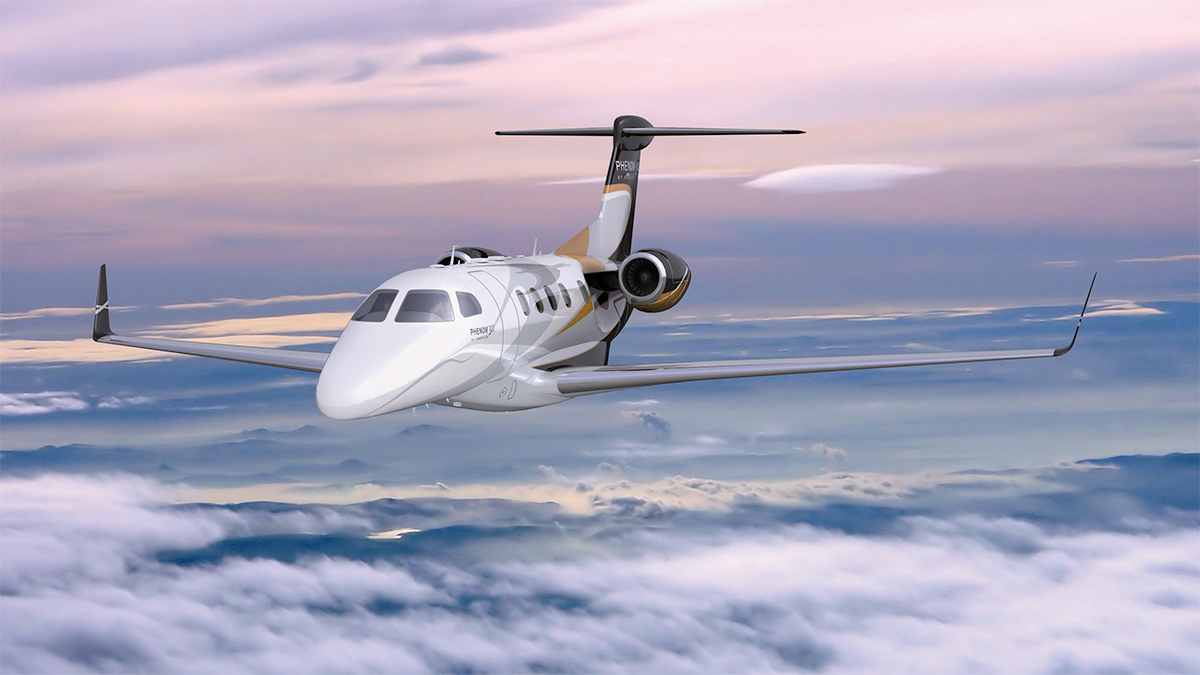
Private Jet Types Compared: Seats, Range, Cabin and Hourly Rates
The table below is the quickest way to compare private jet types. Seat counts are typical charter configurations (certified maximums are often higher). Range is the manufacturer's published maximum with typical passengers and NBAA IFR reserves, so plan on roughly 80–85% of it for real missions with bags, headwinds, and winter weather. Hourly rates are 2026 on-demand charter ranges and match our full private jet cost guide.
| Jet type | Typical seats | Max range | Cabin height | Hourly rate (2026) | Typical mission | Example aircraft |
|---|---|---|---|---|---|---|
| Very light jet | 4–5 | 1,100–1,550 nm | 4'9"–4'11" | $2,500 – $3,500 | 1–2 hr regional hops | HondaJet Elite II, Phenom 100EV, Citation M2 Gen2 |
| Light jet | 6–8 | 1,800–2,200 nm | 4'9"–5'1" | $3,000 – $4,500 | 1–3.5 hr trips, 2–6 passengers | Phenom 300E, Citation CJ4 Gen2, Learjet 75, Pilatus PC-24 |
| Midsize jet | 7–9 | 2,000–2,700 nm | 5'8"–6'0" | $4,500 – $6,500 | 2–5 hr trips, more bags | Citation XLS Gen2, Citation Latitude, Hawker 800XP, Learjet 60 |
| Super-midsize jet | 8–10 | 3,200–4,000 nm | 6'0"–6'1" | $6,500 – $9,500 | Non-stop coast to coast | Challenger 350/3500, Gulfstream G280, Citation Longitude, Praetor 600 |
| Heavy jet | 10–14 | 4,000–4,750 nm | 6'0"–6'2" | $9,500 – $13,000 | Transatlantic, large groups | Challenger 650, Falcon 2000LXS, Falcon 900LX, Gulfstream G450 |
| Ultra-long-range jet | 12–19 | 6,400–8,000 nm | 6'2"–6'5" | $13,000 – $20,000+ | Intercontinental non-stop | Gulfstream G650ER/G700, Global 7500, Falcon 8X |
Two things jump out. First, price roughly doubles every two classes: a heavy jet costs about three times as much per hour as a light jet. Second, the biggest jump in comfort comes between light and midsize, where you go from a crouch-height cabin to one where most adults can stand. If you're comparing specific aircraft rather than classes, use the aircraft comparison tool.
Very Light Jets (VLJs)
Very light jets are the smallest jet type: twin- or single-engine aircraft certified for 4–7 seats, often flown by a single pilot. On charter they are typically set up for 4 passengers and are best for trips of 1–2 hours, such as New York to Washington, Los Angeles to Las Vegas, or London to Geneva. Their advantage is cost: VLJs are the cheapest way to fly a jet privately, at roughly $2,500–$3,500 per hour, and they can use shorter runways closer to your destination.
The trade-offs are real. Cabins are about 4'10" tall, so you sit rather than stand. Baggage space fits a few carry-ons and soft bags, not golf bags and suitcases for four. Most VLJs have only a small belted lavatory or none at all. Common VLJs on the charter market:
- HondaJet Elite II: up to 1,547 nm range, 422 knots, over-the-wing engines that make the cabin quieter than most in its class.
- Embraer Phenom 100EV: about 1,178 nm range, with a 4'11" cabin and among the largest baggage holds in the VLJ class.
- Cessna Citation M2 Gen2: about 1,550 nm range, popular with owner-pilots and charter operators alike.
- Cirrus Vision Jet SF50: a single-engine personal jet with a parachute system; slower (about 311 knots), and more often seen in owner fleets than on charter.
Choose a VLJ when you have three or fewer passengers, light luggage, and a trip under about 90 minutes. Beyond that, a light jet usually costs only slightly more per hour and is faster and more comfortable.
Light Jets
Light jets are the most popular private jet type for business and short leisure trips. A light jet typically seats 6–8 passengers, flies up to about 2,000 nm, and cruises at 400–465 knots, enough for Miami to New York, Chicago to Dallas, or London to Ibiza non-stop. Most have a private enclosed lavatory and an external baggage hold that takes standard suitcases. Light jet charter rates run roughly $3,000–$4,500 per hour in 2026.
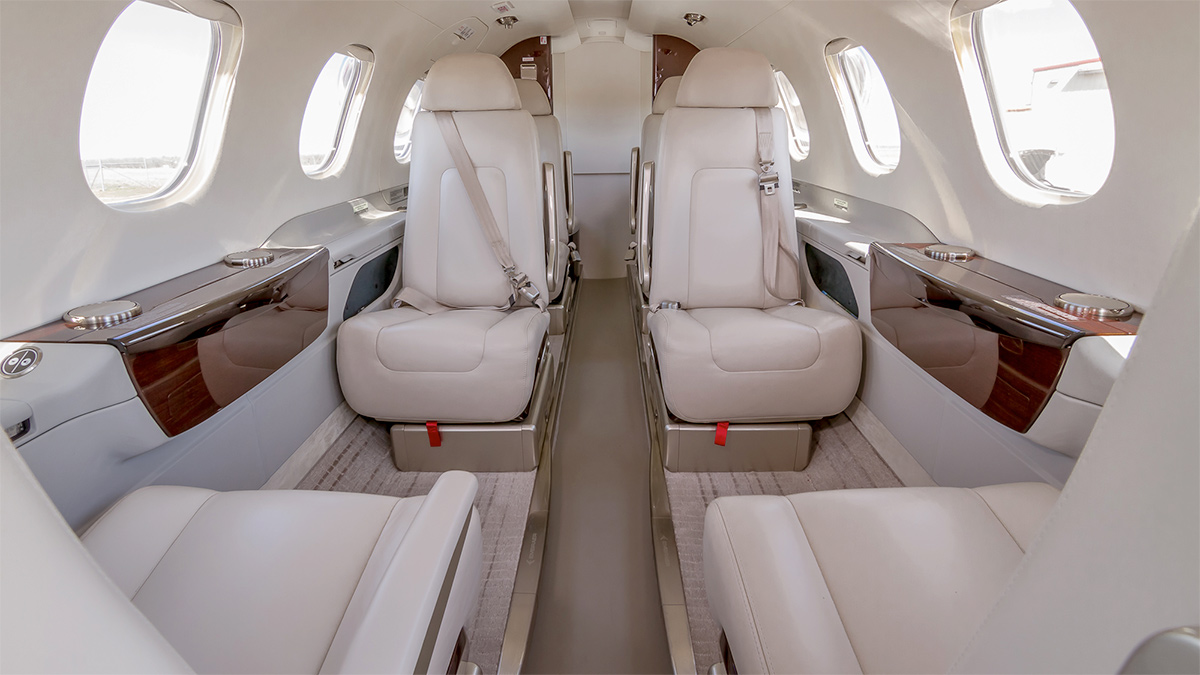
The light jet cabin is roomy enough to sit comfortably in club seating, but at around 4'11" tall you can't stand. For flights up to about three hours, most passengers find that perfectly fine. The light jets you're most likely to be offered:
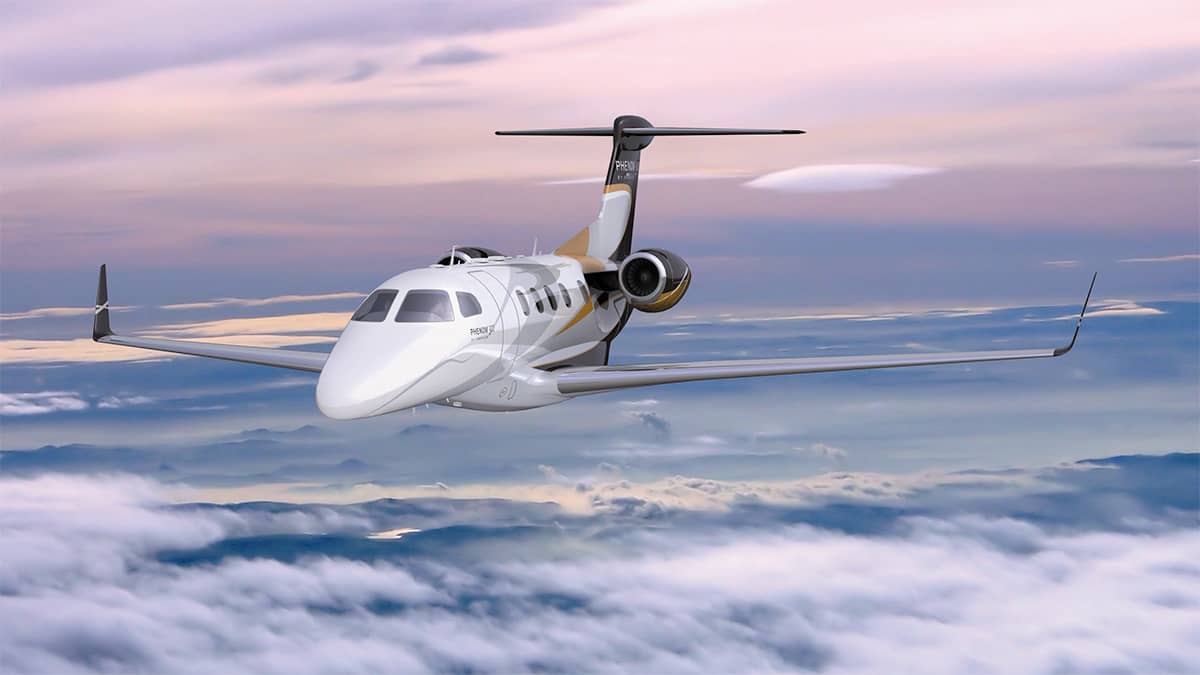
- Embraer Phenom 300E: the best-selling light jet for more than a decade, with a 2,010 nm range, 464 knot top speed, and the largest cabin in the class. See our Phenom 300 guide for full specs and charter cost.
- Cessna Citation CJ4 Gen2: 2,165 nm range and seating for up to 10, though 6–7 is the comfortable charter number.
- Bombardier Learjet 75 Liberty: a fast, high-flying light jet with a 2,080 nm range. Production ended in 2022, but many remain in charter service.
- Pilatus PC-24: about 2,000 nm range, a slightly taller 5'1" cabin, and certification for short and unpaved runways that few jets can use.
Light jets are the default answer for 2–6 passengers on trips of 1–3.5 hours. Watch the limits: a full cabin plus full bags can cut real-world range sharply, and westbound flights into winter headwinds may need a fuel stop well short of the published number.
Midsize Jets
Midsize jets are where private flying starts to feel like a private room. The defining feature is a stand-up cabin of around 5'8" to 6'0", combined with seating for 7–9 passengers, a fully enclosed lavatory, more baggage space (often reachable in flight), and range of 2,000–2,700 nm. That covers New York to Aspen, Chicago to Los Angeles, or London to Athens without a stop in most conditions. Midsize jet charter rates run about $4,500–$6,500 per hour.
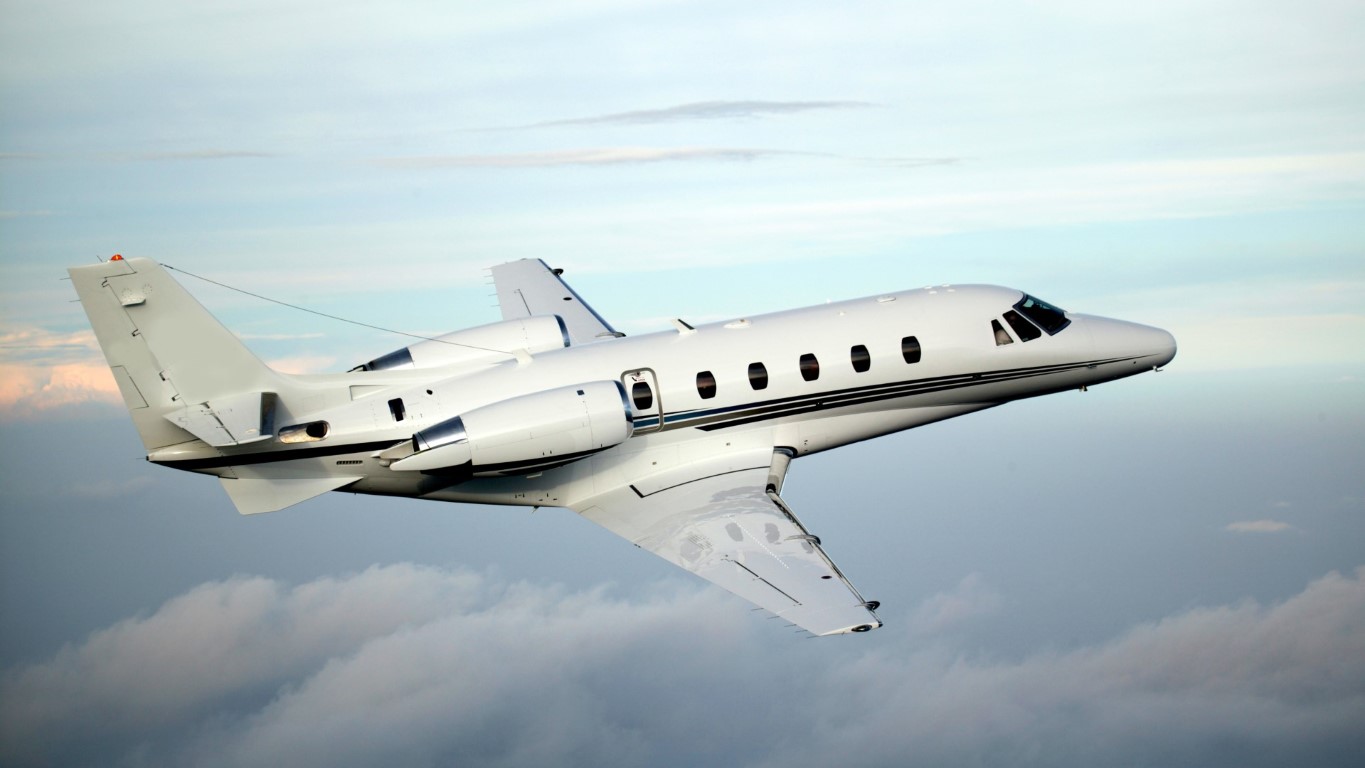
Popular midsize private jets in charter fleets:
- Cessna Citation XLS / XLS+ / XLS Gen2: the workhorse midsize jet, with about 2,100 nm range, a 5'8" stand-up cabin, and strong short-field performance. Full details in our Citation XLS guide.
- Cessna Citation Latitude: a 6'0" flat-floor cabin and 2,700 nm range, often seen as the best-value modern midsize jet.
- Hawker 800XP / 900XP: older but roomy, with a long cabin and about 2,500 nm range, frequently priced at the lower end of the midsize band.
- Learjet 60 / 60XR: fast and with a 5'8" cabin, though narrower than the Citations.
Midsize is the right class when your group is 5–8 people, the trip runs 2.5–5 hours, or someone on board will want to stand, stretch, or use a proper lavatory. It's also the smallest class that comfortably fits skis or golf bags for a full cabin.
Super-Midsize Jets
Super-midsize jets close the gap between midsize and heavy. They offer a wide, 6-foot stand-up cabin with a flat floor, seating for 8–10, and range of 3,200–4,000 nm, which means non-stop coast to coast in the US and routes like New York to Western Europe or London to Dubai in good conditions. Most cruise at 450–480 knots and fly as high as 45,000 feet, above most weather and airline traffic. Expect to pay about $6,500–$9,500 per hour.
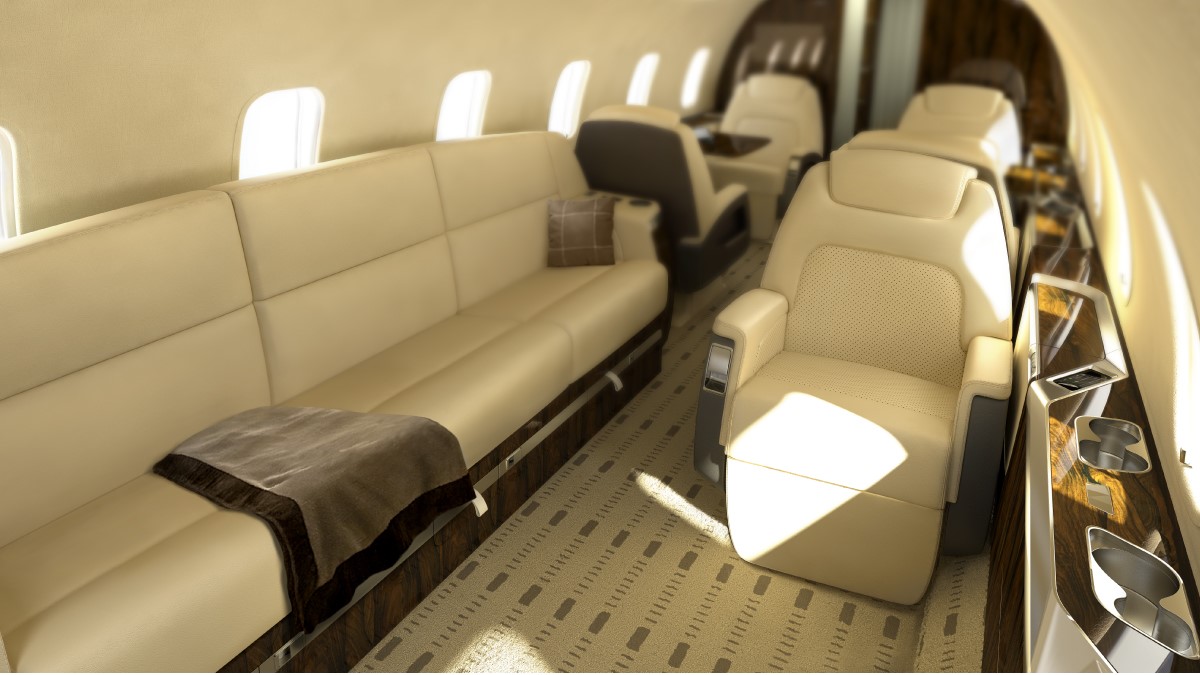
- Bombardier Challenger 350 / 3500: the best-selling super-midsize, with 3,200 nm (350) to 3,400 nm (3500) range and a 6'0" cabin. Read our Challenger 350 charter guide.
- Gulfstream G280: about 3,600 nm range and one of the quietest cabins in the class.
- Cessna Citation Longitude: 3,500 nm range and a 6'0" flat-floor cabin. Cessna markets it as super-midsize, though its cabin borders on large.
- Embraer Praetor 600: 4,018 nm range, the longest in the class. Its sibling, the Praetor 500, is marketed as a midsize but flies 3,340 nm.
Super-midsize is often the sweet spot for groups of 6–9 on trips of 4–6 hours. On a transcontinental trip, flying non-stop instead of stopping for fuel in a midsize can save an hour or more, which narrows the price gap more than the hourly rates suggest.
Heavy Jets (Large-Cabin Jets)
Heavy jets, also called large-cabin jets, are built for groups and long flights. They typically seat 10–14 passengers in two or three cabin zones, with full-height (6'0"–6'2") wide cabins, a full galley, often a crew rest area, and seats that convert into flat beds. Range of roughly 4,000–4,750 nm handles the Atlantic and most of Europe to the Middle East non-stop. Charter rates run about $9,500–$13,000 per hour.
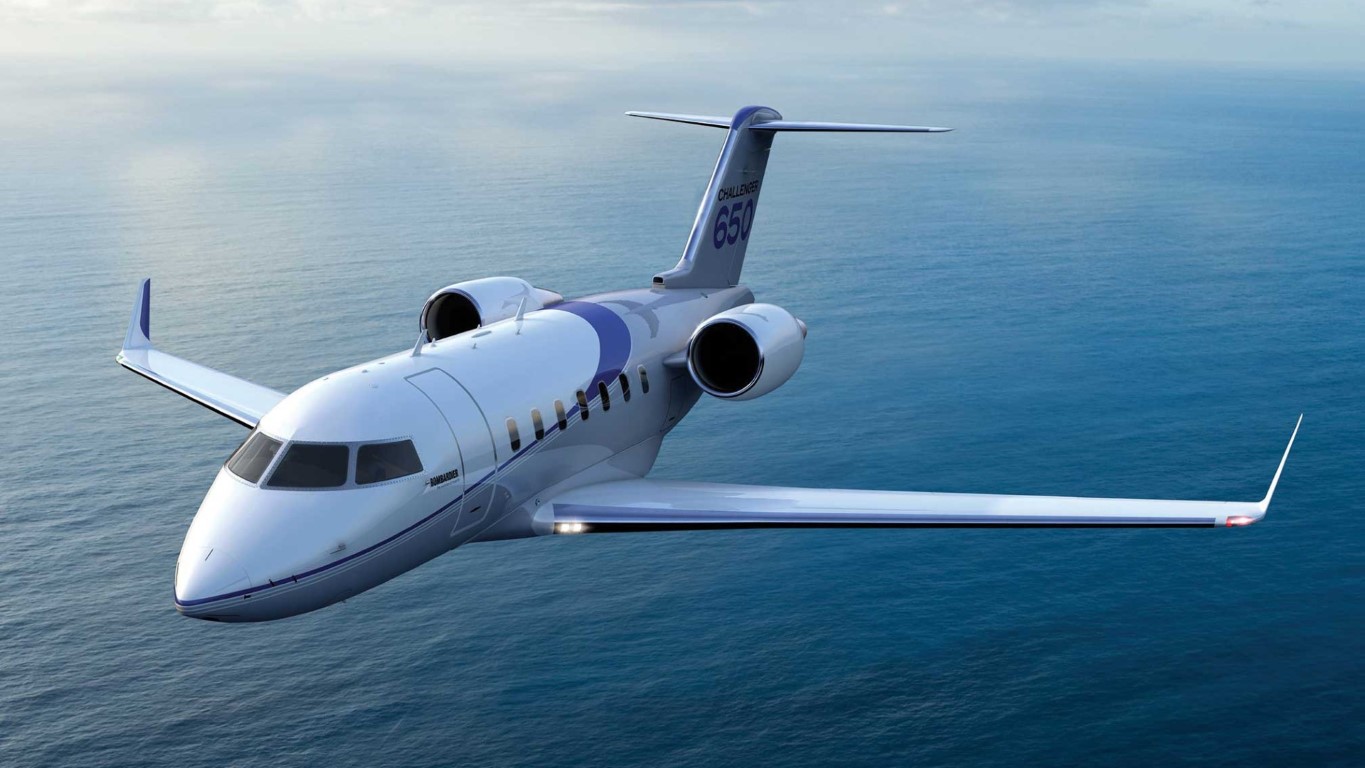
- Bombardier Challenger 650: about 4,000 nm range and the widest cabin in its class, a common choice for groups of 10–12.
- Dassault Falcon 2000LXS: about 4,000 nm range, a 6'2" cabin, and the ability to use shorter runways than most large jets.
- Dassault Falcon 900LX: a three-engine trijet with 4,750 nm range that can reach airports like London City with steep-approach certification.
- Gulfstream G450: about 4,350 nm range, large oval windows, and seating for up to 16, one of the most common heavy jets on charter.
Choose a heavy jet when you have more than about nine passengers, a lot of luggage, or an overnight or transatlantic flight where flat beds and a proper galley matter. For one-stop long-haul trips, a heavy jet often beats the higher hourly cost of the next class up.
Ultra-Long-Range Jets
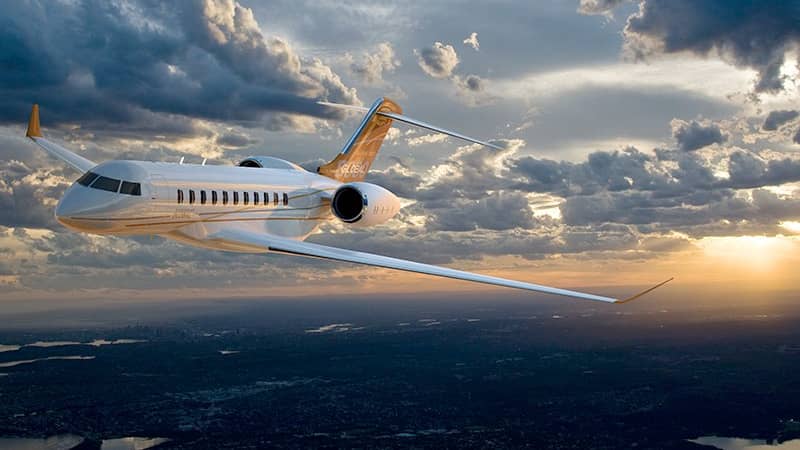
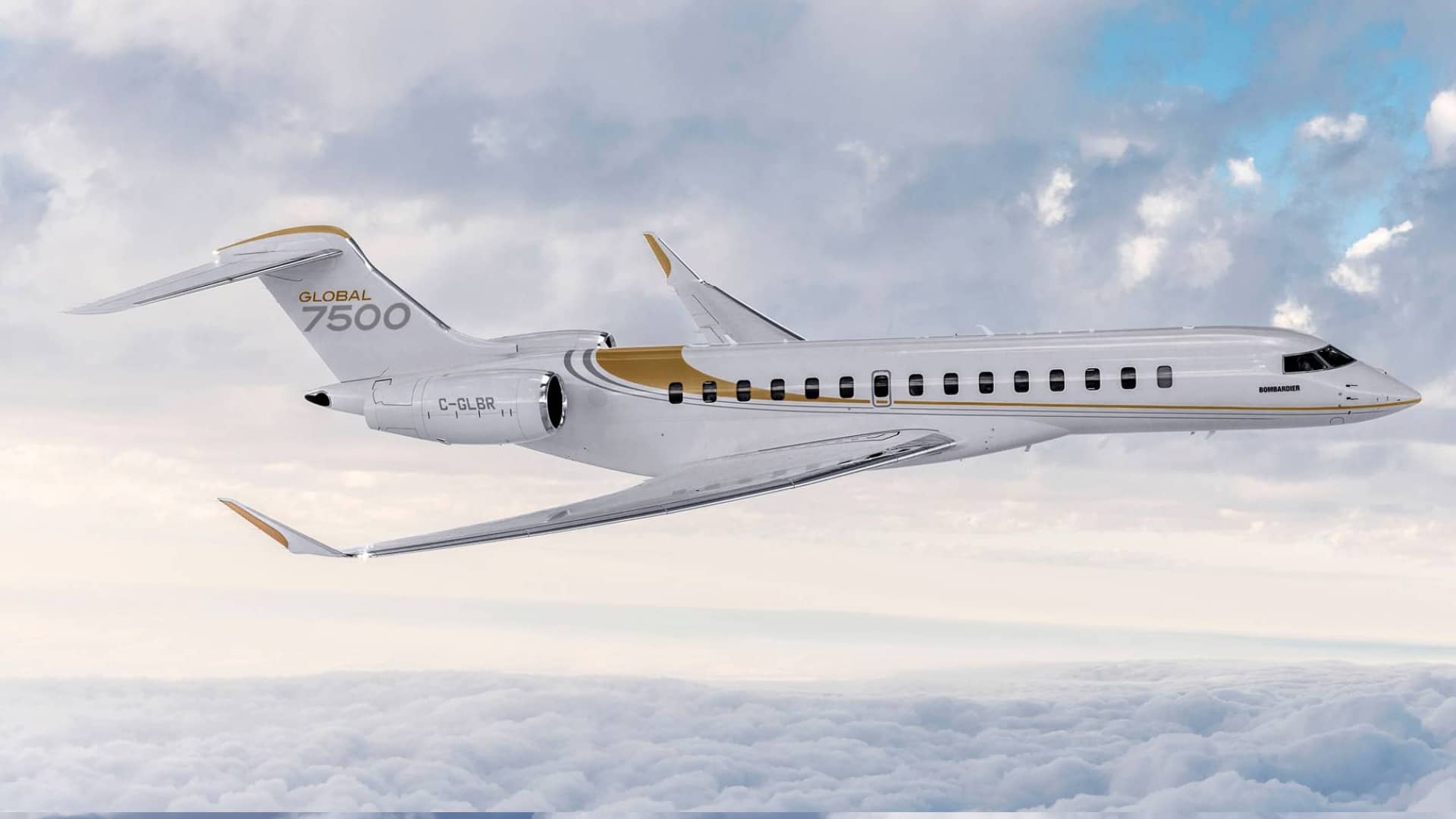
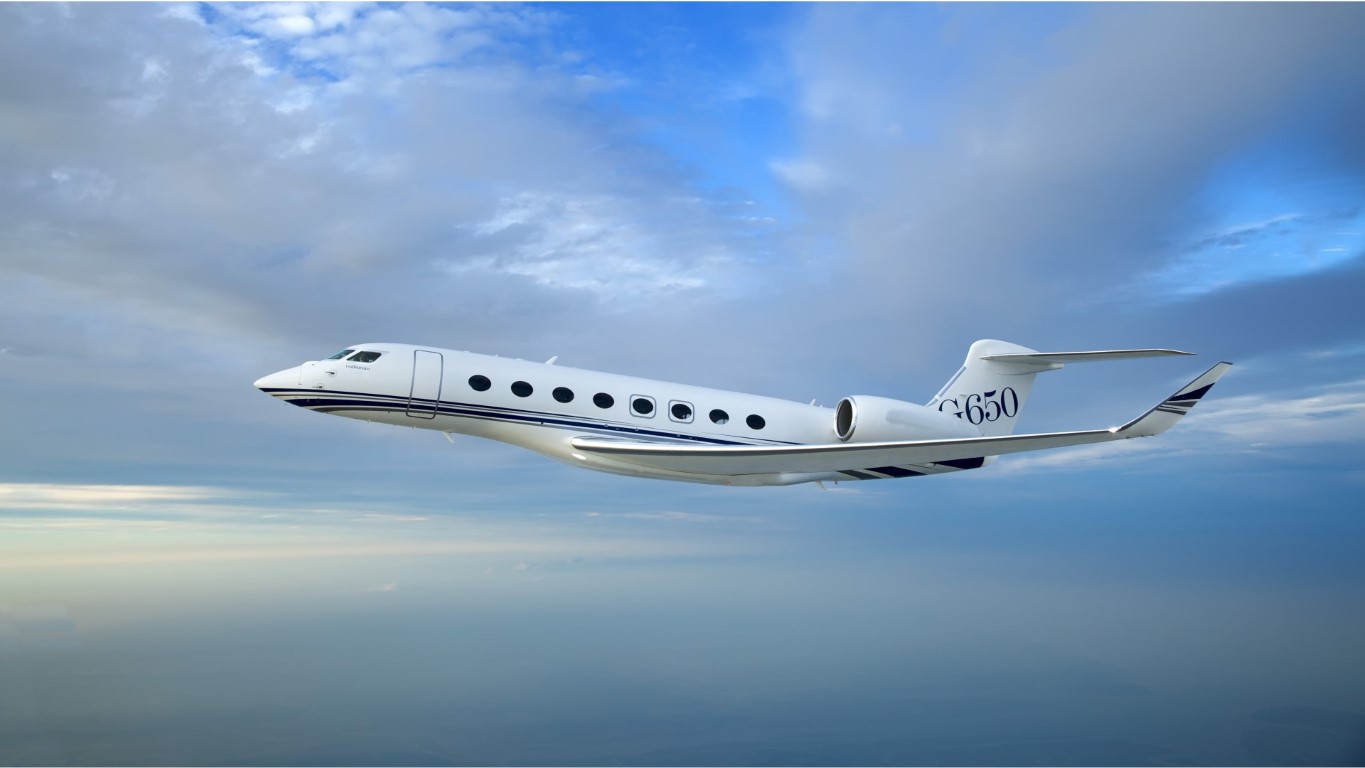
Ultra-long-range jets sit at the top of the private jet types. They fly 6,400–8,000 nm non-stop (enough for New York to Tokyo, London to Singapore, or Dubai to Los Angeles), seat 12–19, and have four-zone cabins with dedicated bedrooms and showers on some models. Charter rates run $13,000–$20,000+ per hour. Leading examples are the Gulfstream G650ER (7,500 nm) and G700 (7,750 nm), the Bombardier Global 7500 (7,700 nm), and the Dassault Falcon 8X (6,450 nm). They're also the fastest civilian jets flying. See our fastest private jets ranking. For a full ranking by range, read our guide to the longest-range private jets, and for cabin layouts see inside luxury private jets.
How to Choose the Right Private Jet Type
The right jet is the smallest one that can fly your passengers and bags non-stop, or with an acceptable stop, in comfort for the length of the flight. Work through these four questions in order.
1. How far are you flying?
| Flight time | Approx. distance | Smallest sensible class |
|---|---|---|
| Under 1.5 hours | Under 600 nm | Very light or light jet (or turboprop under ~300 nm) |
| 1.5 – 3.5 hours | 600 – 1,500 nm | Light jet |
| 3 – 5 hours | 1,300 – 2,300 nm | Midsize jet |
| 4.5 – 6.5 hours | 2,000 – 3,200 nm | Super-midsize jet |
| 6 – 9 hours | 3,000 – 4,500 nm | Heavy jet |
| 9+ hours | 4,500+ nm | Ultra-long-range jet |
Always check the route with headwinds and your actual passenger and baggage load. A jet whose published range "just" covers a route will often need a fuel stop in winter, especially flying west.
2. How many passengers?
Use the typical charter seat count, not the certified maximum. A light jet certified for 9 or 10 is comfortable for 5–6 adults; a midsize for 6–7; a super-midsize for 8; and a heavy jet for 10–12. Above about 14 passengers you are into VIP airliners or group charter.
3. How much luggage?
Baggage is the most common reason a booking moves up a class. Light jets take roughly one medium suitcase per person. Ski bags, golf clubs, or large hard cases for a full cabin usually need a midsize or larger. Tell your broker about oversized items when you request the quote, because a jet that can't fit your bags is the wrong jet whatever its range.
4. How much comfort matters?
On a flight under two hours, cabin height hardly matters. Over three hours, a stand-up cabin and a private lavatory make a noticeable difference, which is why many travelers who could technically fit in a light jet choose midsize for anything longer. On overnight flights, a heavy or ultra-long-range jet with lie-flat seating is worth its premium.
What Each Jet Type Costs per Trip
Hourly rates only tell part of the story. The estimates below multiply typical one-way flight time by the 2026 hourly range, then add about 15–20% for taxes, fuel surcharges, landing and handling fees. Real quotes vary with aircraft location (repositioning), dates, and operator. Treat these as planning figures, not quotes.
| Trip (one way) | Flight time | Jet type | Estimated all-in cost |
|---|---|---|---|
| New York (TEB) → Boston | ~1 hr | Light jet | $4,000 – $6,000 |
| Los Angeles → Las Vegas | ~1 hr | Light jet | $4,000 – $6,000 |
| Chicago → Miami | ~3 hrs | Midsize jet | $16,000 – $23,000 |
| New York → Los Angeles | ~5.5 hrs | Super-midsize jet | $42,000 – $62,000 |
| New York → London | ~7 hrs | Heavy jet | $78,000 – $107,000 |
Three ways to pay less without dropping to a jet that's too small: book an empty leg (a repositioning flight sold at a deep discount), choose an aircraft already based near your departure airport to avoid repositioning charges, and avoid peak holiday dates. For a full breakdown of fees, jet cards, and ownership, see our private jet cost guide.
Frequently Asked Questions
What are the main types of private jets?
The main private jet types are very light jets (4–5 seats), light jets (6–8 seats), midsize jets (7–9 seats), super-midsize jets (8–10 seats), heavy or large-cabin jets (10–14 seats), and ultra-long-range jets (12–19 seats). Turboprops and VIP airliners sit at either end of the range but are not usually classed as private jets.
What is a light jet?
A light jet is a small twin-engine business jet that typically seats 6–8 passengers, flies up to about 2,000 nautical miles, and cruises at 400–465 knots. Popular light jets include the Embraer Phenom 300E, Cessna Citation CJ4 Gen2, Learjet 75, and Pilatus PC-24. Light jets usually have an enclosed lavatory but a cabin too low to stand in.
How much does it cost to charter a light jet?
Light jet charter costs roughly $3,000–$4,500 per flight hour in 2026, before taxes and fees. A one-hour trip such as Los Angeles to Las Vegas typically costs $4,000–$6,000 all-in one way, while a three-hour light jet flight usually runs $11,000–$16,000.
What is a midsize jet?
A midsize jet is a business jet with a stand-up cabin (about 5'8" to 6'0" tall), seating for 7–9 passengers, and range of roughly 2,000–2,700 nautical miles. Examples include the Cessna Citation XLS, Citation Latitude, Hawker 800XP, and Learjet 60. Midsize jet charter costs about $4,500–$6,500 per hour.
What is the difference between a midsize and super-midsize jet?
Super-midsize jets have wider, flat-floor cabins and much longer range: 3,200–4,000 nautical miles versus 2,000–2,700 for midsize. That extra range allows non-stop US coast-to-coast flights. Super-midsize jets such as the Challenger 350 and Gulfstream G280 charter for about $6,500–$9,500 per hour, compared with $4,500–$6,500 for midsize.
What is a heavy jet?
A heavy jet, also called a large-cabin jet, seats 10–14 passengers in a full-height cabin with multiple seating zones, a full galley, and often lie-flat seats. Heavy jets fly roughly 4,000–4,750 nautical miles, enough for transatlantic trips, and charter for about $9,500–$13,000 per hour. Examples include the Challenger 650, Falcon 2000LXS, Falcon 900LX, and Gulfstream G450.
Can you stand up in a light jet?
Generally no. Most light jets have cabin heights of 4'9" to 5'1", so passengers sit and move around stooped. The smallest jets with a stand-up cabin are midsize jets such as the Citation XLS (5'8") and Citation Latitude (6'0").
What size private jet do I need?
Choose the smallest jet that fits your passengers and luggage and can fly the route in one leg, or with a stop you can accept. As a guide: light jets for up to 6 people on trips under about 3.5 hours, midsize for up to 8 people on trips of 3–5 hours, super-midsize for non-stop transcontinental, heavy for transatlantic or groups over 9, and ultra-long-range for intercontinental non-stop flights.
Which private jet type is the best value?
For most trips under three hours, the light jet offers the best value per passenger, especially when 5–6 people share the cost. For longer flights, a super-midsize jet often beats a midsize on total trip cost, because flying non-stop avoids a fuel stop, its extra flight time, and landing fees. Empty-leg flights can make any class significantly cheaper if your dates are flexible.
Find the Right Jet for Your Trip
Matching the jet type to your trip is the single biggest decision in private charter: too small and you face fuel stops and cramped bags; too large and you pay for seats and range you don't use. Tell us your route, dates, passenger count, and luggage, and we'll recommend the right class and source matching aircraft. Request a free charter quote, browse current empty leg deals, or explore our fleet by type: very light, light, midsize, super-midsize, heavy, and long-range jets.